
The Work
Before the first song, I already know the space — and who I'm playing for.
Before any wedding, there are two things I need to know: the space where the dance floor will happen, and the people who'll be on it. That work starts long before the first song — in the questions I ask, in the conversations that follow. Over the years, these two lenses earned names: Blueprint, for the space. Soundprint, for the people. Not two services — one way of preparing to arrive at the wedding knowing enough to decide well, live.
The dance floor system
A great dance floor takes more than great music.
What happens around the dance floor shapes it. A floor that’s too big spreads people out. The right song at the wrong moment doesn’t work.
- Dance floor size
- Bar location
- Stage
- Guest flow
- Sound and lighting
- Guest profile
- Time of night
- The couple’s presence
Blueprint · the space
I look at the space through the eyes of whoever will be running that dance floor that night.
Where it sits, how people get to it, what's nearby — bar, lounges, stage. How sound, light, circulation, and entertainment relate to that space: choices that can either favor the dance floor or create distractions that only surface once the party's already underway.
This runs alongside whoever designs, decorates, produces, or handles sound and light for the space — I talk with all of them along the way. It's about bringing the perspective of whoever will actually be in that room, playing, in from the start.
For the couple
You don't need to understand floor plans, sound, or guest flow — that's on me. I ask what I need to, talk to whoever's taking care of the space, and arrive on the day knowing how it works.
Soundprint · the people
Before understanding what you want to hear, I want to understand who you are.
Your story as a couple — the chapters of life you carry, the families and friends who'll be on the floor, the memories certain songs hold. That comes before any song list.
That's where the tools come in: conversations, a collaborative playlist, the songs that can't be missing, the ones that shouldn't play. The playlist holds these references; it isn't a setlist, and on its own it's not everything I need to know about you.
I'm not just collecting music in our meetings — I'm noticing what lights you up, the story behind a song, who you mention when you talk about it. That's what helps me read the floor later, in the moment.
What I ask of you
Everything. Your playlist, the songs from the beginning of your relationship, the one that always plays when the whole family's together. It's not so I play all of it — it's so I understand who I'll be spending that night with.
Performance · live
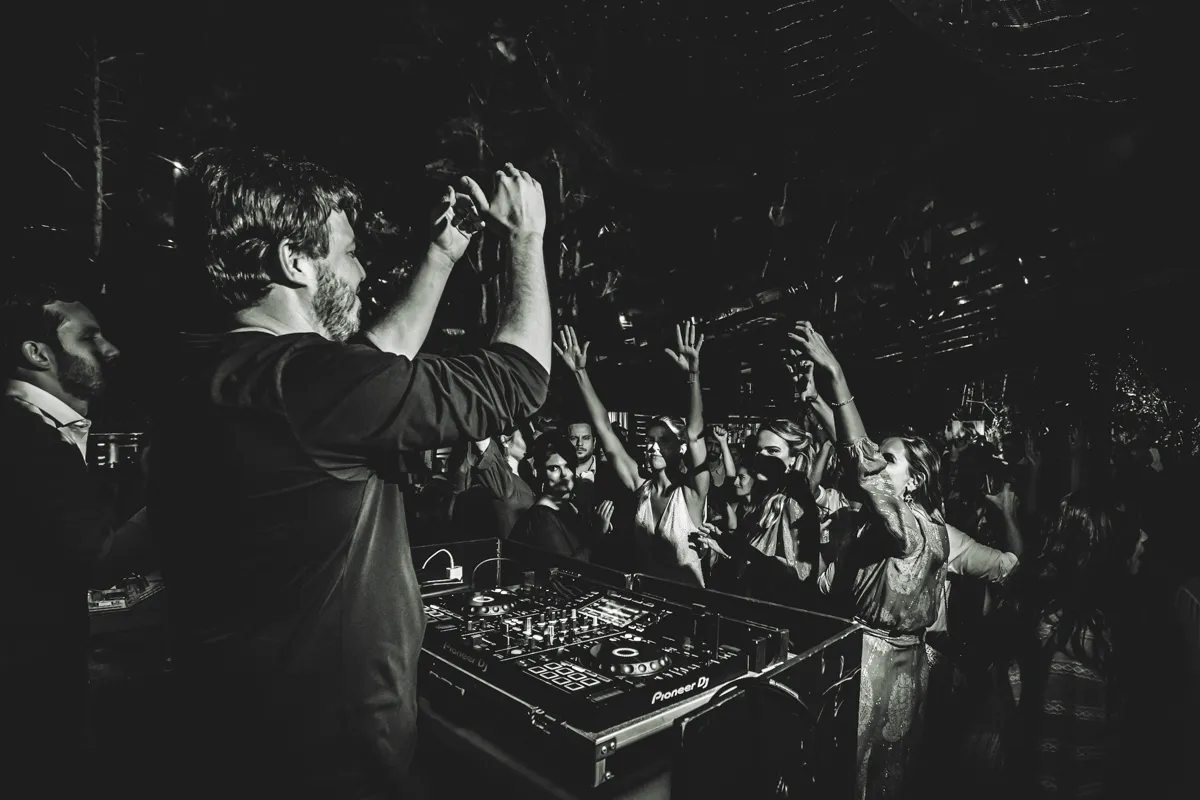
I arrive knowing the space and knowing you — never with the party already decided. On the floor, I watch, try a direction, read the response, confirm it or change it. I push when the floor asks for it, hold back when it isn't time yet — and it's in that in-between that the moments nobody planned show up.
This is where Blueprint and Soundprint meet what couldn't be predicted. What I know about the space and about you doesn't decide the party — it gives me the context to read what only shows up once everyone's actually there, together, on the same floor.
Why I plan so much
Planning doesn't exist to control the party. It exists to give me more freedom to decide during it.
All of this exists so that, on the day, you only have to live the party. The next conversation is about the people who'll be on that dance floor.
Check my date